Ice Dam Prevention in Rochester, NY: What To Do Before Next Snow Fall
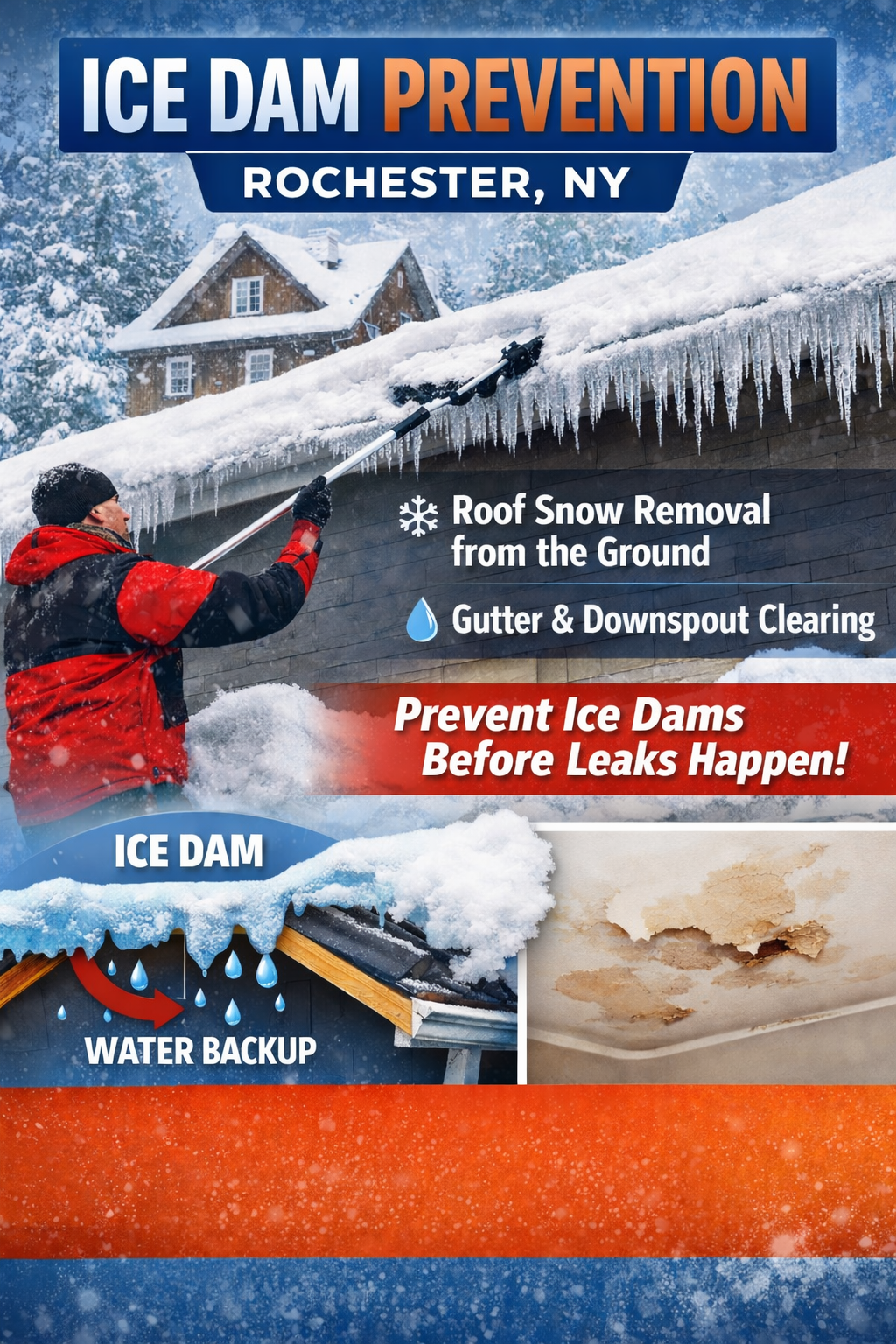
Ice dams form when snow melts on the warmer upper roof, runs down to the colder eaves, refreezes, and creates an ice ridge that traps water. Once water can’t drain, it can back up under shingles and leak into the attic/ceilings.
Rochester often gets the kind of winter pattern that makes this worse: snow buildup followed by temps hovering around freezing, then a drop back below 32°F. If you’ve dealt with ice dams before, this is the exact window to get ahead of it.
The prevention goal (simple)
Keep the roof edge from becoming an ice “dam.” The most practical homeowner-level prevention is:
Keep snow at the eaves to a minimum
Keep gutters/downspouts flowing
Long-term: reduce attic heat loss (air sealing/insulation/ventilation)
Do it right:
Focus on the first 3–6 feet above the gutter line
Prioritize valleys, dormers, and over-garage roof edges
Stay on the ground; avoid ladders on ice
Clean gutters and confirm downspout flow
If gutters/downspouts are clogged, meltwater can’t drain, which worsens edge icing and backup risk. NWS explicitly calls out cleaning gutters and downspouts so melting snow can flow through the system.
Quick checks:
Gutters clear of debris
Downspouts not blocked at the bottom
Water can exit away from the foundation (extensions help)
Long-term fix (not a DIY quickie)
If ice dams repeat every winter, the building-science consensus is that the real fix is reducing heat loss to the attic and keeping the roof deck cold: air sealing + insulation + ventilation.
Storm Coming? Get Ahead of Ice Dams (Rochester, NY)
Ice dams start building before you see interior leaks. The most practical prevention step is keeping snow at the roof edge/eaves to a minimum and making sure meltwater can drain. The National Weather Service specifically calls out cleaning gutters/downspouts and using a roof rake from the ground to reduce ice-dam risk.
Want us to handle it before it becomes a removal job?
Call/text 585-201-8533 to get on our storm route list.
When it’s a good time to call a pro
Call early (prevention stage):
Heavy snow load at the eaves and temps bouncing around freezing
You can’t roof rake safely from the ground (height/steepness/obstructions)
You’ve had ice dams in the same spots before (valleys, dormers, over garages)
Call immediately (damage-control stage):
Water stains, drips, bubbling paint, ceiling sag
Thick ice ridge along the gutter line with persistent icicles
Our Pre-Ice-Dam Prevention Service (before leaks start)
If you’ve dealt with ice dams before—or you’re looking at heavy snow and near-freezing temps—prevention is about removing the “fuel” and keeping water moving.
What we do:
Ground-based roof-edge snow clearing (eaves-first)
We remove snow from the lower roof edge where ice dams form. Both the National Weather Service and IBHS recommend roof rakes/snow rakes from the ground to keep roof snow to a minimum and reduce ice-dam formation risk.
Problem-spot clearing (where ice dams start first)
We prioritize valleys, dormers, roof transitions, and over-garage sections (common repeat offenders).
Gutter + downspout winter-flow check (when safely accessible)
The National Weather Service recommends clearing gutters and downspouts so meltwater can flow through the drainage system.
When to book (simple triggers)
Prevention stage: heavy snow + temps near freezing + you can’t rake safely from the ground. (weather.gov�)
Urgent: any interior staining/dripping, or a thick ridge forming along the gutter line.
FAQ: Do I need roof-edge snow clearing?
How soon after a storm should I clear the roof edge?
Sooner is better—especially if temps are hovering around freezing. NWS emphasizes keeping roof snow to a minimum and notes roof rakes allow removal while standing on the ground.
How much snow needs to come down before it’s “worth it”?
If snow is piled at the eaves, drifting, or heavy/wet—and temps are expected to bounce around freezing—ice dams can start quickly.
Is it safe to do myself?
If you can do it from the ground with a roof rake and good footing, that’s the safest DIY approach. IBHS recommends raking from the ground and suggests hiring a licensed/insured pro as an alternative.
I get ice dams every year—what’s the real fix?
Long-term, the building-science solution is reducing attic heat loss and keeping the roof deck cold: air sealing + insulation + ventilation. We handle the storm-response prevention (snow/flow management); persistent repeat issues usually require building-envelope improvements.